
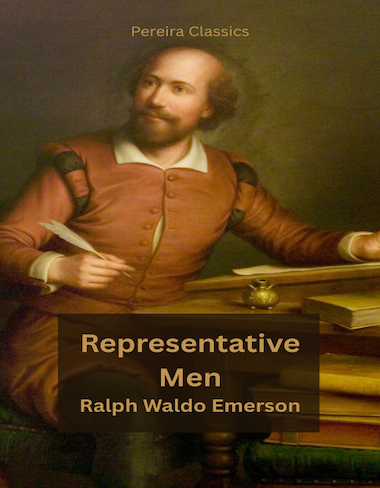
This is a collection of six essays in which Emerson explores the idea that great individuals embody universal human qualities. Each essay focuses on a particular historical figure — Plato, Napoleon, Goethe Montaigne, Shakespeare and Swedenborg — who represents a distinct type of genius, such as the philosopher, mystic, skeptic, poet, man of action, and writer. Emerson does not present these men as flawless heroes; instead, he uses them to illustrate how human potential expresses itself in different forms. Through these portraits, Emerson argues that studying great individuals helps readers better understand themselves and the shared capacities of humanity.

Representative Men (1850) by Ralph Waldo Emerson
This is a collection of six essays in which Emerson explores the idea that great individuals embody universal human qualities. Each essay focuses on a particular historical figure— Plato, Napoleon, Goethe Montaigne, Shakespeare and Swedenborg — who represents a distinct type of genius, such as the philosopher, mystic, skeptic, poet, man of action, and writer.
Listen ![]()
| Author | Ralph Waldo Emerson |
|---|---|
| About The Author | Ralph Waldo Emerson (1803–1882) was an American essayist, poet, lecturer, and philosopher, and a leading figure of the Transcendentalist movement. He believed in the inherent goodness of people, the importance of self-reliance, and the value of individual intuition over tradition and authority. Emerson’s writings, including essays such as Nature, Self-Reliance, and Representative Men, emphasize personal growth, moral independence, and a deep connection between the human spirit and the natural world. His ideas had a lasting influence on American literature, philosophy, and social thought. |


Reviews
There are no reviews yet.